Resources
Navigating the immigration system can be overwhelming and confusing. This page is a hub for tools and information to support undocumented individuals, immigrant families, and community advocates. Below, you’ll find links to guides, legal resources, and educational materials designed to empower and inform. Explore the sections below for specific guides and tools tailored to different situations and click the provided links to access the full content directly from trusted organizations.
-
Garro Pinchi v. Noem: Habeas Petition Templates for Release From Immigration Detention
Individuals unlawfully re-detained in Northern and Central California may request release by filing a habeas petition in federal court.
On December 19, 2025, a federal district court in California blocked the Trump administration’s policy of unlawfully re-arresting and re-detaining immigrants the government previously released from custody after concluding they were neither dangerous nor a flight risk. For decades, people who met these criteria were allowed to remain free while their immigration case proceeded if they complied with their conditions of release.
The ruling in Garro Pinchi v. Noem prohibits ICE from re-arresting and re-detaining members of the class and subclass (as defined in the Practice Advisory and FAQs) at immigration court, an ICE or Intensive Supervision Appearance Program (ISAP) check-in, a U.S. Citizenship and Immigration Services appointment, or anywhere else without a material change in circumstances as to their dangerousness or flight risk.
If you believe you, your client, or a loved one has been detained by immigration agents in the San Francisco ICE FieldOffice’s Area of Responsibility in violation of the Garro Pinchi v. Noem order, Centro Legal de la Raza and our partners have resources available to help:
Please fill out this form which will go to the attorneys handling the case. They may contact you with additional questions.
You also may consider filing a habeas petition to seek the individual’s release from custody using the templates below. A habeas petition is a document filed with a federal district court that explains that someone is being held in custody unlawfully and requests that the court release them.
Questions for the attorneys?
Email: gp_class@lists.keker.com
Temporary Restraining Order Template
TRO Proposed Order Template -
Click the links below to download red cards that you can print and cut at home.
-
The New Registration Requirement: Frequently Asked Questions
Provided by the Immigrant Legal Resource Center (ILRC)
The ILRC has complied answers to common questions about the new EOIR registration requirement - including who must register, how to do it, and the consequences of not registering. This resource outlines key steps, deadlines, and provides guidance to help individuals stay informed and in compliance with the new process.
Click here to access the resource: The New Registration Requirement: Frequently Asked Questions
-
Provided by the Immigrant Legal Resource Center (ILRC)
This comprehensive guide helps families create a plan for immigration-related emergencies. It offers detailed steps on arranging childcare, organizing important documents, and understanding your right to ensure your family’s safety and preparedness in case of an emergency.
Click here to access the resource: Step-by-Step Family Preparedness Plan
-
Published by the Asian Law Caucus
This guide empowers immigrant communities by outlining their rights in various scenarios, such as interactions with Immigrant and Customs Enforcement (ICE) at home or work. It also provides resources on fighting deportation, obtaining bond hearings, and applying for pardons, ensuring individuals are informed and protected.
Click here to access the resource: Know Your Rights: Guide for Immigrant Communities in 2025
-
Published by the National Immigrant Justice Center (NIJC)
This resource educates individuals on their constitutional rights during encounters with ICE. It Emphasizes the importance of remaining silent, not signing documents without legal advice, and having a safety plan. The guide aims to help individuals protect themselves and their families during such interactions.
Click here to access the resource: Know Your Rights: If You Encounter ICE
-
This guide informs undocumented students and their families about their educational rights in California. It covers topics such as the right to a K-12 education, protections against immigration enforcement on school campuses, and guidelines on how schools should handle student information.
-
Through Know Your Rights Workshops, we provide trainings on how to navigate interactions with ICE and protect your legal rights. Whether you’re part of a community group, or an organization, you can request a workshop or training session to gain practical tools for protecting yourself and your loved ones.
Complete this “KYR Workshop or Training Request From” to learn more.
-
If you see ICE activity, suspect an enforcement action, or someone you know is detained, follow these steps to ensure accurate and effective reporting.
Be The Primary Witness: Only report what you personally see to prevent misinformation.
Provide a Specific Location: Clearly state the exact address or cross streets where ICE activity is happening. If it’s a business or apartment complex, include the name if possible.
Take a Picture or Video: If it is safe to do so, capture photos or videos of ICE agents, vehicles, or activity.
Identify ICE Behavior: Describe what ICE officers are doing. Are they arresting, interrogating, or patrolling? Are they entering homes or workplaces? Are they stopping people on the streets?
Describe What ICE Officers Are Wearing: Are they in plain clothes, uniforms, or vests? Do they have badges, weapons, or tactical gear?
IMPORTANT:
DO NOT approach ICE agents or interfere with their actions.
DO NOT share videos or images on social media before calling ACILEP.
DO NOT assume someone has been detained without confirming.
-
This recorded training is available exclusively to individuals who sign up to volunteer through our official volunteer registration form. Access is password-protected to ensure privacy and security.
The training covers essential topics for supporting immigrant communities, including:ICE check-ins and immigration court accompaniment (by Bay Resistance)
Rapid Response Activation following ICE arrest
ICE verification
Introduction to pro se asylum applications and Special Immigrant Juvenile Status (SIJS)
If you’re interested in volunteering and gaining valuable knowledge to support our immigrant community, please complete our volunteer sign-up form to receive access to this training and future opportunities.
If you’ve already signed up and would like to receive the password, or have not yet received it, please email us at info@acilep.org.
Help us spread the word!
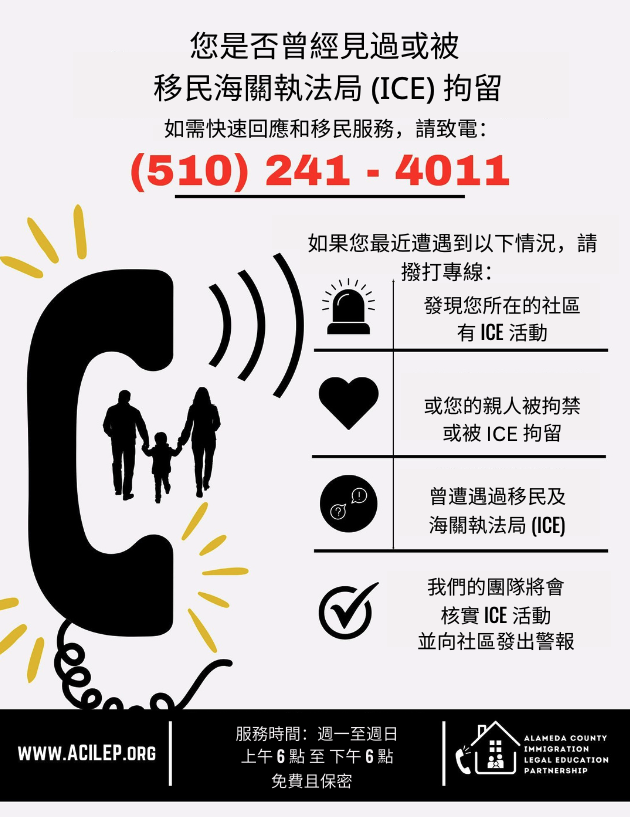
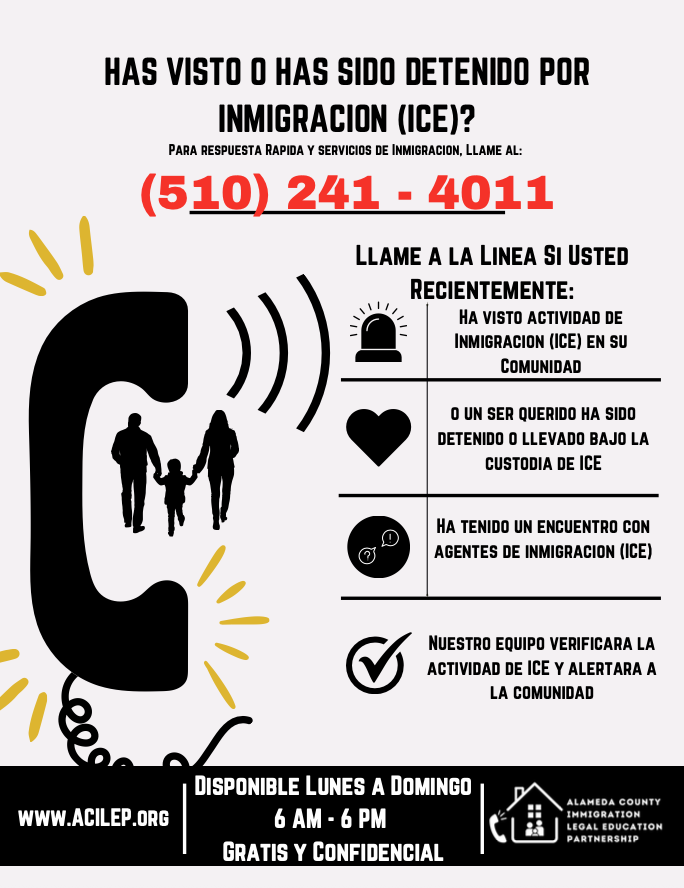
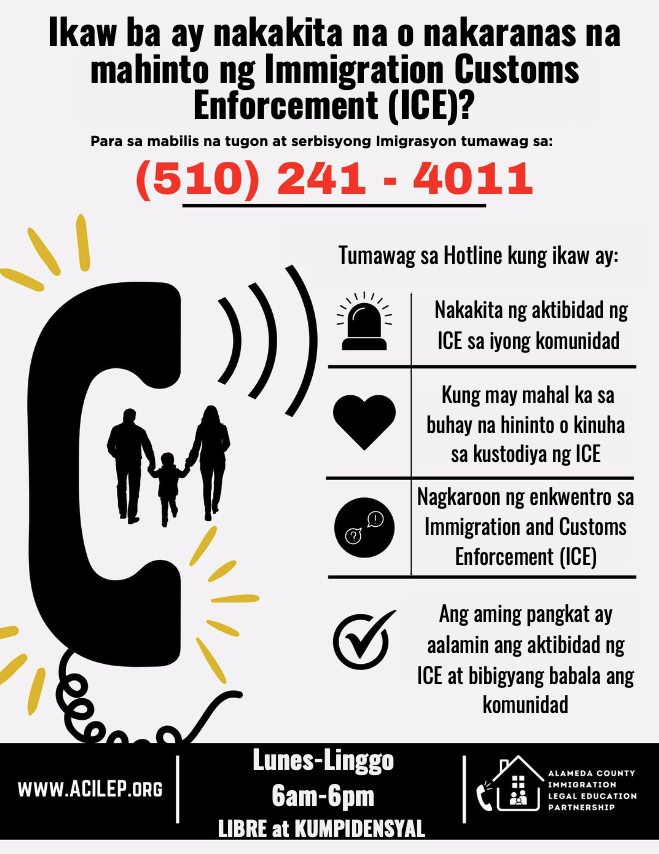
Below, you’ll find downloadable flyers in Spanish, English, Traditional Chinese, Tagalog, and Vietnamese, that you can print, share, and distribute in your community. (More languages coming soon!)